How Employees Can Benefit From Workplace Assessments
At Activ Totley Clinic, we specialise in Occupational Health Physiotherapy, helping businesses create safer, healthier, and more productive workplaces ensuring that both individuals and organisations thrive. Our physiotherapists work closely with employers and employees to assess work environments, manage injury-related absence, and prevent musculoskeletal issues caused by poor posture or workstation setup.
What Does an Occupational Health Physiotherapist Do?
Occupational Health (OH) Physiotherapists work closely with employers to prevent, assess, and manage work-related health issues. We provide expert advice on workplace ergonomics, posture, injury prevention, and the rehabilitation of staff who may be absent due to musculoskeletal or related conditions.
My practice focuses on three core services:
Desk Screen Assessments (DSE Assessments) remote/online or face to face assessment (One hour).
These assessments are designed to ensure that every employee’s workstation meets both ergonomic best practice and the requirements, meeting standards and regulations of the UK Health and Safety (Display Screen Equipment) Regulations for desk-based workers. Further information can be found on this website Working safely with display screen equipment - HSE
A DSE assessment includes:
Evaluation of desk, chair, screen, keyboard, and mouse set-up.
Postural assessment and advice.
Recommendations for equipment adjustments or specialist aids (e.g., ergonomic chairs, footrests, sit-stand desks).
Guidance on breaks, stretches, basic exercises and movement throughout the working day.
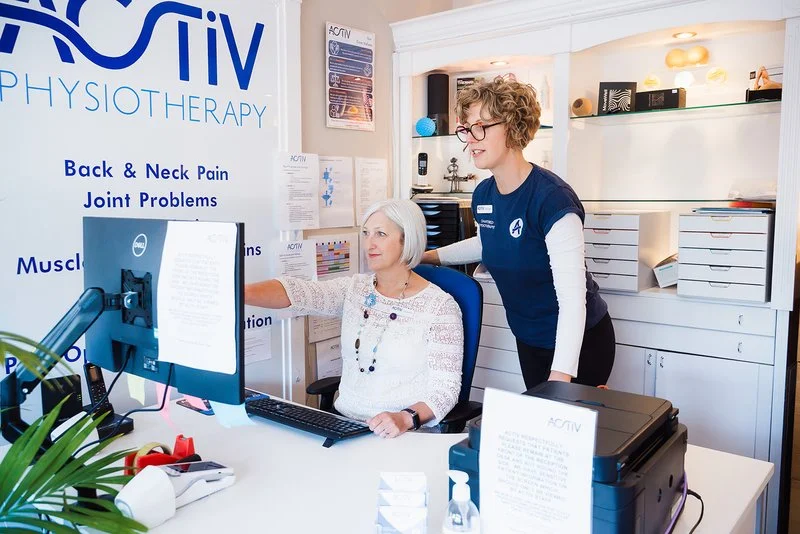
George demonstrates part of a Desk Screen Assessment for Hope administrator Annette.
Even small changes, such as screen height or chair positioning, can dramatically reduce the risk of repetitive strain injuries (RSI), neck and back pain, and eye strain.
2. Case Management for Short and Long-Term Absence Assessment remote or face to face (up to 90 minutes).
As a physiotherapist within occupational health, I play a key role in supporting return-to-work plans for employees recovering from Musculoskeletal disorders or injuries.
A Case Management Assessment involves:
Assessment of current physical capability.
Job tasks and physical demands.
Medical treatments and outcomes.
Developing a graded return-to-work plan with reasonable adjustments What reasonable adjustments are - Reasonable adjustments at work Acas.
Recommendations for employer and employee.
Providing ongoing rehabilitation advice and monitoring progress with follow up assessment as required.
Rehabilitation/physiotherapy treatment sessions that can be block booked at Totley clinic with discount to support early return to work, this is to treat and prevent recurring musculoskeletal injuries.
Liaising with GPs, HR, and occupational health advisors as needed.
Workplace Risk / Stress Risk Assessments.
Addressing if an employee meets disability legislation under the Equality Act 2010 – The Equality Act has significant implications for individuals and organisations, ensuring that everyone is treated fairly and without discrimination. It provides a legal framework for individuals to challenge discriminatory proactiveness and seek redress if they believe that they have been treated unfairly.
For more detailed information, you can refer to the official legislation here or visit the UK government's guidance page on the Equality Act here.
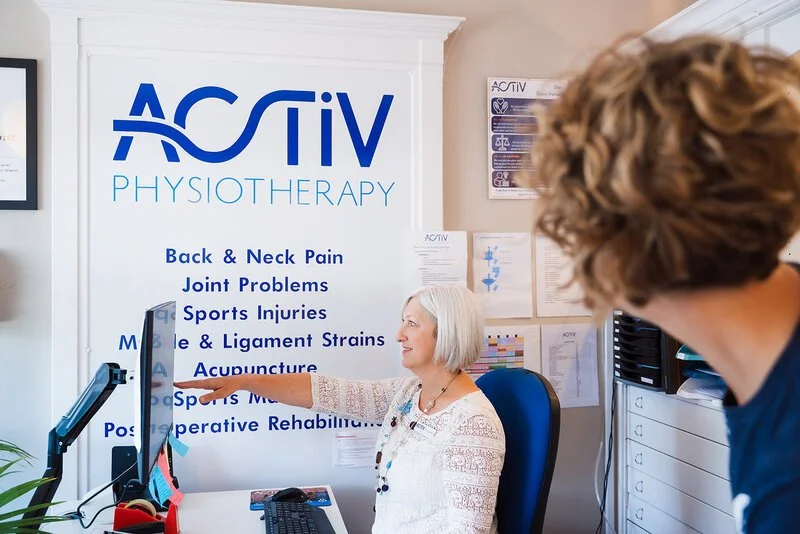
George assessing the correct distance to desktop screen.
3. Workplace Assessments (One Hour).
These are broader, environment-focused evaluations for employees who perform manual handling, have mobility challenges, or require specific adaptations.
The Workplace Assessment may include:
Observation of job tasks and physical demands.
Identification of risk factors contributing to pain or injury.
Recommendations for ergonomic equipment or task modification.
Liaison with HR, line managers, or equipment suppliers.
The goal is to make the workplace as safe and functional as possible, while supporting staff to remain at work comfortably and productively.
This proactive approach from the employer helps reduce long-term absence, improve employee morale, and lower company costs related to absenteeism.
The benefits of OH (Occupational Health) Physiotherapy Services (often called Occupational Health Physio Services) focus on the prevention, management and rehabilitation of work-related injuries and musculoskeletal disorders.
It is important to know these benefits extend to BOTH employees and employers.
BENEFITS FOR EMPLOYEES
1. Faster Recovery and Return to Work.
Early access to physiotherapy helps speed up recovery from injuries, reducing pain and downtime.
2. Reduced Pain and Discomfort.
Physiotherapists use manual therapy, exercise, and ergonomic advice to manage pain effectively.
3. Injury Prevention.
OH physios assess workplace habits and ergonomics, helping employees adopt safer movement and posture techniques.
4. Improved Mobility and Strength.
Tailored exercise programs restore normal movement, strength, and flexibility.
5. Increased Confidence at Work.
With professional support, employees feel more confident performing their duties safely after injuries.
6. Holistic Support.
OH physios often address physical and psychosocial factors (stress, anxiety, etc.) that can affect recovery and can refer to talking therapies or employee assistance programs or cognitive behaviour therapies. Workplace stress risk assessment.
BENEFITS FOR EMPLOYERS
1. Reduced Employee Sickness Absence.
Early physiotherapy intervention can significantly cut time off work due to musculoskeletal issues.
2. Improved Productivity.
Healthier, pain-free employees perform better and more consistently.
3. Lower Costs from Workplace Injuries.
Preventing and managing injuries effectively reduces compensation claims, insurance costs, and lost hours.
4. Better Workplace Ergonomics.
Physiotherapists assess job roles and advise on workstation setup, lifting techniques, and posture which prevents repetitive strain injuries.
5. Enhanced Employee Wellbeing and Retention.
Providing access to OH physio shows genuine investment in employee welfare, improving morale and retention.
6. Compliance with Health & Safety Standards.
OH physio services support legal and ethical obligations to provide a safe working environment.
LEGAL RESPONSIBILITIES OF EMPLOYERS
Under the Health and Safety at Work Act 1974 and the Management of Health and Safety at Work Regulations 1999, employers have a legal duty to ensure the health, safety, and welfare of their employees. More information can be found here:
Risk assessment: Template and examples – HSE
Failure to comply can result not only in legal consequences but also in lost productivity and increased sickness absence due to preventable musculoskeletal issues.
For more information, please contact Mignone at:
Totley Physio Clinic, 88 Baslow Road, Totley, Sheffield, S17 4DQ.
TEL 0114 235 2727
If you would like to book an appointment with our team of experienced physiotherapists and sports massage therapists, call one of our friendly clinics:
Sheffield Physiotherapy Treatment: 0114 235 2727
Hope Physiotherapy Treatment: 01433 623 602