Why Rock Climbing Gives You A Top View - And A Full-Body Workout!
I got into climbing while I was in my second year at Loughborough University where I studied straight from school. I had been obsessed with my dream of becoming a top class middle-distance and cross-country runner. I spent my first year training to be a runner, fighting through injuries and working hard to make the team.
During my summer holiday, which I spent working in Grenoble, France, I realised that being in the mountains was exhilarating and exciting and opened up new adventures – and a new social life. When I returned to university, I stopped training for running and joined the climbing club! I found it great fun and spent my weekends travelling to Stanage Edge in a minibus, even through the winter, and I loved the physical hardship and camaraderie of my new life. I also loved the practical ingenuity of placing protection to keep me and my climbing partner safe. I haven't looked back since then, as climbing has never become boring.
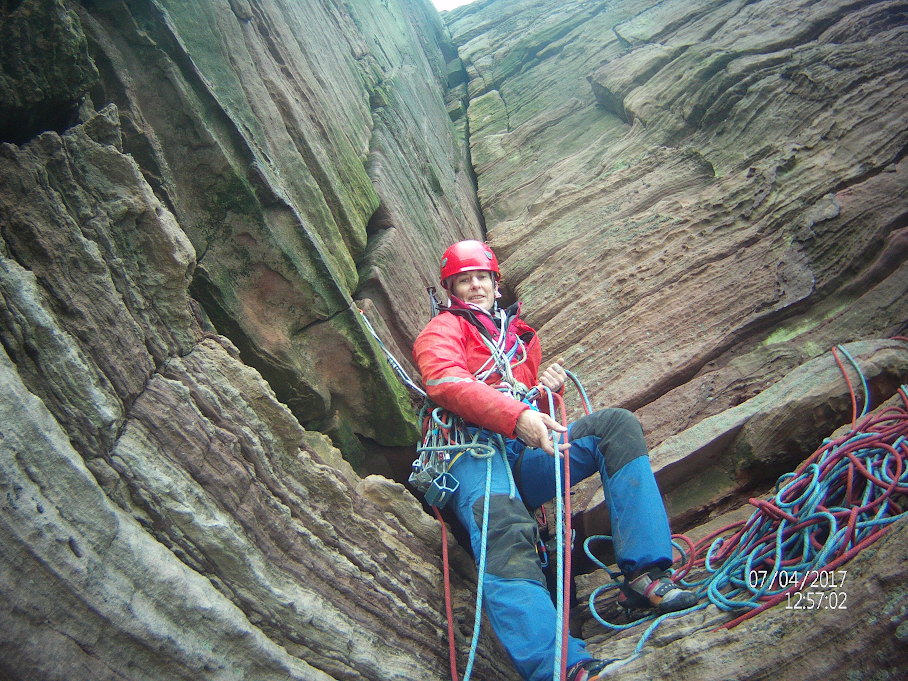
Nikki is pictured scaling The Old Man of Hoy
In 2017, I ticked off the climb I had wanted to do for ages. I scaled the 137-metre (449 ft) high sea stack known as The Old Man of Hoy, which is located off the coast of the island of Hoy in the Orkneys.
Climbing provides a unique kind of fitness opportunity. Outdoors, there is the inevitable uphill walking with a heavy rucksack to strengthen the legs and help cardiovascular fitness. Climbing itself is a great test of the fingers and shoulders, and climbers tend to have well-developed latissimus dorsi muscles contributing to the typical 'upside down triangle' shaped body associated with the activity.
My experience of physiotherapy has been very general and I have not specialised in climbing injuries. I know from personal experience that shoulder, elbow and finger injuries tend to plague climbers, but in the hands of an experienced physiotherapist can be treated so full climbing activity can be resumed!
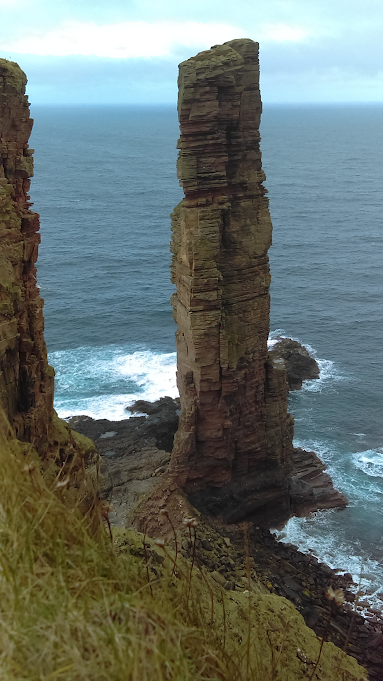
The standard original route (East Face) of the sea stack is generally climbed with five pitches (rope lengths), often using 60m ropes for the 3-pitch abseil descent of the prominent landmark on Hoy, the second largest of the Orkney Islands.
Rock Climbing Injuries
The majority of injuries that result from climbing are in the upper extremities.
Pulley injuries are the most common climbing injury. 'Pulleys' are the soft-tissue structures that hold the tendon to the bone in the fingers.
Tendonitis in the shoulders.
Elbows and wrist sprains.
Ligament injuries.
The Physical Benefits of Climbing
Climbing-specific exercises to warm up before an ascent, cross-training and balanced nutrition can all help avoid injury. From a fitness perspective, rock climbing uses your entire body and every part of the musculoskeletal system. Not only does climbing strengthen the upper extremities in a way that few other sports do, but it also strengthens focus in the mind. It's really that combination of mind-body which keeps you both fit and alert. Many climbers say climbing enables them to switch off and escape from the day-to-day stresses as they focusing on goals not related to their everyday work. They enjoy the sense of achievement of reaching a pinnacle and enjoying a stunning view too!
Many of the benefits of climbing on different parts of the body:
Back and Shoulders: Latissimus dorsi (pulling), rhomboids, and deltoids (reaching and stability).
Arms and Hands: Forearm flexors (grip strength), biceps (pulling), and triceps (pushing/mantling).
Core: Rectus abdominis: obliques, and transverse abdominis (tension and balance).
Legs: Quads, hamstrings and glutes (pushing up).
Hips: Hip flexors (high stepping).
If you would like to book an appointment with our team of experienced physiotherapists and sports massage therapists, call one of our friendly clinics:
Totley Clinic: 0114 235 2727
Hope Clinic: 01433 623 602